
The Quiet Inheritance

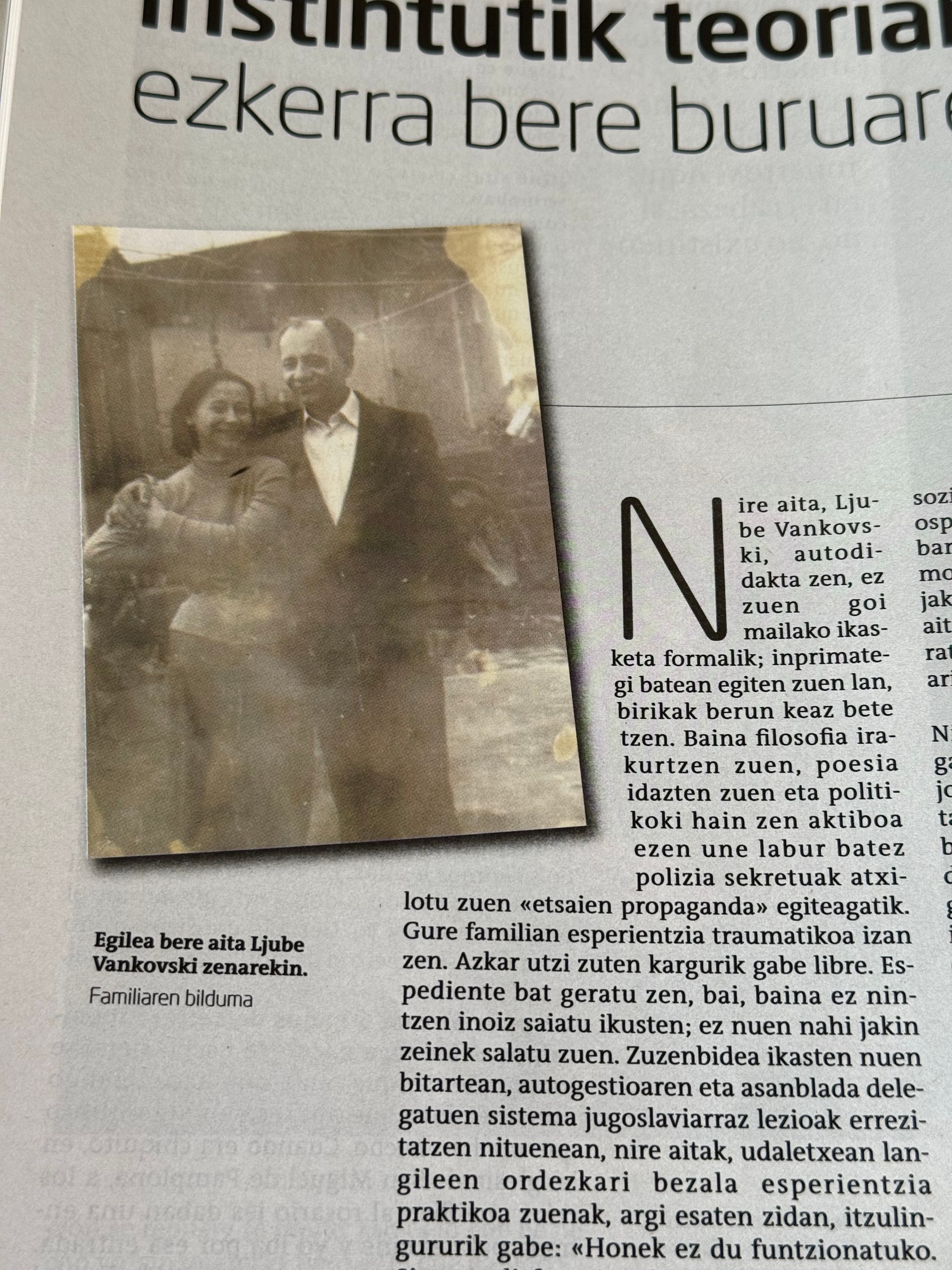
The morning of that April 26, 1982, was as luminous as this one. The kind of morning that feels like a quiet promise. Although I was still in the final (eighth) semester of my law studies, we all knew I would remember that day as the day I graduated ahead of time. My father, always an early riser, was already up, freshly shaved, his face lit by a gentle, knowing smile. We shared a cup of coffee in that soft morning light, and then I set out to take my last two exams—Political System and Social Protection and Policy. One before noon, the other in the afternoon. A long day stretched before us, yet beneath it all lay a certainty: I would return home a graduate lawyer. The only question was with what grades. A perfect ten in one, a nine in the other.
When I came back, my mother had prepared a modest celebration, just enough to mark the moment. We gathered as we always did: my parents, my brother with his wife and their little boy, and our neighbors, separated from us by nothing more than a wall. That Balkan closeness—where neighbors become family without ceremony. And yes, there was one more: the other newly graduated lawyer who walked beside me that day—my boyfriend, the man who would become my husband.
It was a warm, joyful evening, full of quiet pride. But it ended abruptly, as so many things did in those years, when the electricity was cut. Yugoslavia was in the grip of a severe energy crisis, and darkness arrived on schedule, around eight. By candlelight, we cleared the room, our shadows flickering against the walls, and slowly prepared for sleep.
I did not know that it was the last night I would say goodnight to my father.
We lived modestly, closely: my parents in one room, my brother and his family in another, and I on a sofa in the kitchen. I must have fallen asleep quickly, but a thought lingered like a quiet unease: what would tomorrow bring? No more obligations, no clear path ahead. Jobs were scarce in those years of economic hardship, and without “connections,” doors remained closed. My father would always tell me, in his calm, steady way: don’t worry. Give your best, and things will find their place. Until then, we’ll manage—together—with my pension.
That night—the night that would fracture everything—I dreamed.
And that dream has never released me. In it, I was arguing fiercely with the man I loved most. My father. He was drunk, he had humiliated me before others, and I was shouting, my voice breaking, why are you doing this to me? Even now, I cannot forgive myself for the violence of that dream. Because while I was dreaming, he was fighting—silently—for his life.
I do not know what woke me. The dream, perhaps, or a disturbance in the house. But when I rose, everyone was already awake. My uncle rushed out to call an ambulance from his telephone—something we did not have; it was a luxury then. They were all gathered around my father. He seemed to be sleeping. Peaceful, almost. It felt indecent, intrusive, for so many of us to stand over a man at rest.
The doctors arrived after some time. Not hurried. Not alarmed. Almost distant. Their words were cold: cerebral coma. No hope. It was not even advisable, they said, to move him to a hospital.
But I still ran. To the so-called Military Hospital, breathless, clinging to a fragment of denial, asking if there might be a bed. Even that, it turned out, was too much to hope for. There was no space.
I ran back, carrying that refusal like a weight inside me. But before I reached the yard, I saw our neighbor stepping out, his face drained of color, his hands clutching his head in helpless despair.
In that instant, I understood.
I had not been there when my father died. I was late.
After that, everything dissolves into fragments. I remember almost nothing—except the unbearable coldness of his forehead, of his hands. Those same hands that had always been warm, even in the deepest winter, wrapping around my small fingers, sheltering them in the pockets of his coat.
That was my first encounter with death. And it never truly ended.
His absence never ceased. I was fortunate—blessed, perhaps—that my mother remained my pillar for so many years, all the way to her ninetieth. But that loss carved something permanent within me. Neither he nor I ever had the chance to rejoice in my success. Yet I carried with me something greater than any grade: his unwavering faith. He believed in me long before I had learned to believe in myself. That faith became my compass, my quiet inheritance: give everything you have, and life will, somehow, arrange itself.
And still, I owe him something.
His manuscripts—yellowed now with time—rest with me. Unpublished. Unshared. There is a reason. The Writers’ Association of Macedonia, not long after its founding, became an exclusive circle, and worker-poets, like him, remained—above all—workers. After his first published collection and several poems in journals, he applied for membership. They rejected him. Without explanation. On his way home, shattered, he threw an entire folder of new poems into the Vardar River.
What I hold are the poems that came later. Written not for recognition, not for belonging, but because something within him insisted on being heard. Perhaps that is why I have kept them all these years—not as literature, but as something sacred. A quiet inheritance. Intimate. Irreplaceable. Mine.
Biljana, I’m so sorry. At least you knew him, and knew he loved you and believed in you. The dream, and that’s all it was although it has stayed with you, was showing you the opposite of your real father. It was only a dream. I never knew my father; never even met him. He left my mother before I was born, and left a huge, bottomless hole in me that I’ve never bean able to fill. Remember your father as he was. You will meet him again one day, and in the meantime he is proud of you and knows of all your achievements. May he rest in peace. With love to you Biljana from ZainahElizabeth
When my father died, I already migrated and could no be with him, so this is something that speaks to me: “Written not for recognition, not for belonging, but because something within him insisted on being heard. Perhaps that is why I have kept them all these years—not as literature, but as something sacred. A quiet inheritance. Intimate. Irreplaceable. Mine.” There are memories that stay with us and make us who we are. Thank you!